
Glintale
A year of short stories, and finally the data to decide which one goes first
It started with a simple wish, to make something short and entertaining but for reading, and it grew between my partner and me. A year later there are more than 600 registered readers without a cent spent on ads, only SEO, and at last we can decide with numbers instead of by eye.
The short moments of the day, the metro, a queue, the ten minutes before sleep, are nearly always filled with videos. Glintale was born from wanting to fill that same gap with something else, something short, but for reading. A story you can read in one journey and that leaves you wanting the next chapter.
I told my partner about it, and from that day it has been a project of the two of us. Together we built an MVP and, little by little, turned it into a fairly complete product, which we keep growing and which already has people really reading. On my own, it would probably have stayed a note on my phone.
What it is
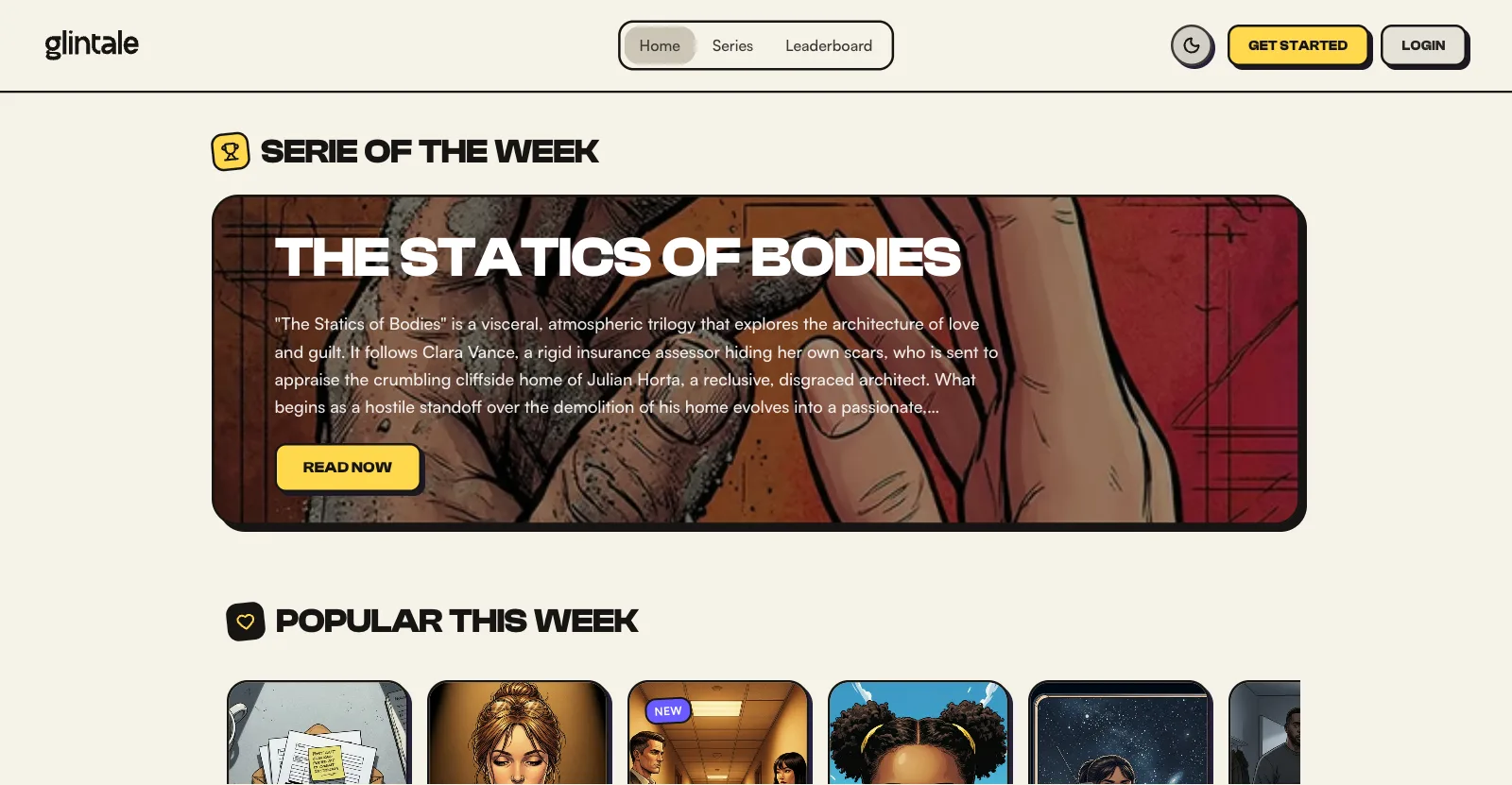
Glintale is fiction series split into chapters of about five minutes. Each series has between three and eight chapters, each chapter has its own illustration, and there is a bit of everything: thriller, romance, horror, science fiction, comedy. Right now there are 72 series and more than 400 chapters, and new ones come out every week.
You can read the first chapter without an account. Around 40% of the way in, the story stops and asks you to sign up to keep going, free and in a few seconds. If the cut comes too early it sends people away, and if it comes too late it convinces nobody. Around 40% you already care what happens.
How people find it
We have not run a single ad. Everyone comes from search, which is why the site is not only the app: there are pages for what people actually look for, short thriller stories, stories to read before bed, stories for the commute. Each one shows a couple of series that fit and goes straight to the first chapter.
It is slow, SEO always is. In exchange we do not pay for every person who comes in, and in the first year there are already more than 600 registered readers.
What changes when you have numbers
Until recently we made decisions by eye. Now there are enough people to look at what they do rather than what we think they do. The dashboard tells us things like this: of those who start a series, a little over half finish the first chapter, one in three opens the second, and one in ten comes back another day.
That last number is the one we care about most and the worst one. It is almost more useful than any opinion, because it tells us exactly where we have to work.
Which story goes first
One of the decisions that used to be pure intuition is which series someone who just arrived sees first. Now it comes from a ranking. Each series has a score that mixes how many people go from chapter one to two, which weighs the most, how many finish the series, how they rate it and how many visitors without an account sign up after reading it. Readers see the series in that order, after their favourite genres, which they pick with a few questions when they join.
The tricky part is that with few readers, percentages lie. A series two people have read can have 100% and mean nothing. So each score is pulled towards the average as if the series had ten extra ordinary readers, and only moves away when there are enough people to believe it. And new series get a small push for their first two weeks, because otherwise nobody would ever see them and they would never have data.
So that you come back
Since coming back is the hard part, there are a few pieces made for that. A streak of days reading, a daily mission of three chapters, points, levels and a leaderboard with the other readers. We are clear that this is not what makes a story hook you, the story does that. But it helps you remember to open it tomorrow.
What I am taking from it, for now
- That with data you decide better and faster. Which series goes first no longer depends on which one we like most.
- That with few people you have to distrust pretty percentages. 100% over fifteen readers is not a good series, it is a small sample.
- That SEO is slow and boring, and even so it is what brought us every reader we have.
Next is coming back. Getting someone who reads a chapter today to want another one tomorrow, and from there thinking about what someone who already reads every week would be willing to pay for.
Screenshots
More work