
Obiblion
Selling a piece of Mars without lying to anyone
Some ideas sound like a scam before you finish explaining them. This one started with a question: can you do the same thing without fooling anybody?
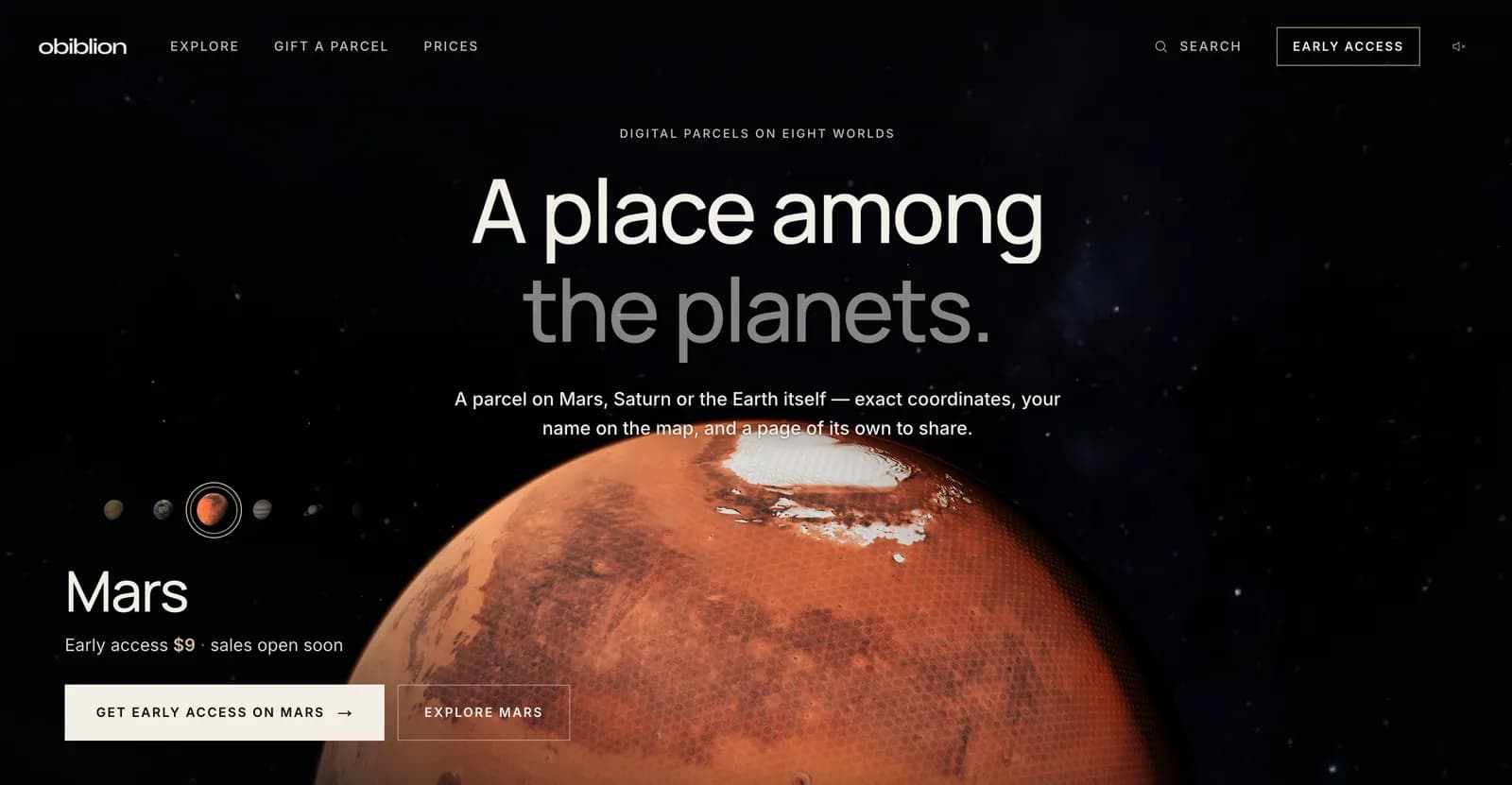
Some ideas sound like a scam before you finish explaining them. This is one.
"I sell parcels on the planets." You say it out loud and you see the face. The other person already knows the story: Moon deeds, certificates with a gold seal, the acre on Mars someone gave you for a birthday that is not worth the paper. And they are right to be wary. Almost everything in that market lives on nobody reading the small print.
So Obiblion started with a slightly odd question: can you do the same thing without fooling anybody?
The idea, plainly
Obiblion divides eight planets into hexagons. You choose a planet, you choose a hexagon, you give it your name and a few words, and that piece has exact coordinates, a code and a page of its own to share. Utopia Planitia, 36.3° N 82.2° E, with your name on it.
That is all. It is not land, not an investment, not an NFT. It says so on the home page, in the questions and in the terms, and it says so on purpose where people read. I even wrote a whole guide on why what others sell is not what they claim. There is something funny about launching a product and spending your first article explaining what your product is not.
I think that was the most important decision in the project, and there is nothing visual about it. If I could not sell it telling the truth, it was not worth selling.
What it is
What it is, or what I want it to be, is a gift. Something for the person who lives far away, for an anniversary, for someone who likes looking up. That is why you can give a parcel and choose the exact moment it is revealed. The product is not the hexagon. It is the gesture.
The part I enjoyed too much
The planets are 3D models with NASA textures. Each has named regions: on Neptune you can pick a hexagon in the Great Dark Spot, the one Voyager 2 saw in 1989. There is a sound button. There are rarities by magnitude, like stars.
And there is a detail I love. A grid of hexagons cannot cover a sphere with hexagons alone: mathematically it is left with twelve pentagons, always twelve. Instead of hiding them, I made them the rarest parcels in the catalogue. Twelve per planet. A flaw in the geometry that ended up being the most special thing.
I had a great time making all of that, and that is exactly why I am a little suspicious of it. When the central assumption is untested and you are polishing the interface, maybe you are avoiding something. And here the central assumption is simple: will anybody pay for this? I do not know yet, because you cannot buy it yet.
What I am doing now
Obiblion is on a waitlist, no card needed. Whoever signs up gets early access at a lower price, and moves up if they bring someone. I would rather the first signal be small and real than big and imagined. A waitlist is not money, I know. But it is people leaving their email without being asked, and that says more than any "what a lovely idea".
The prices are an experiment too, and pricing something like this comes with its own vertigo. There is nothing honest to compare it with: what the competition charges is inflated by what it promises, and I do not promise that.
What I am taking from it, so far
- That honesty can be the product and not just a constraint. Where everyone exaggerates, saying "this is not land" is what sets you apart.
- That I like building the pretty part too much, and I have to watch it.
- That the question that matters has not changed since day one: whether anybody will pay. And that one is only answered by opening sales.
Screenshots
More work
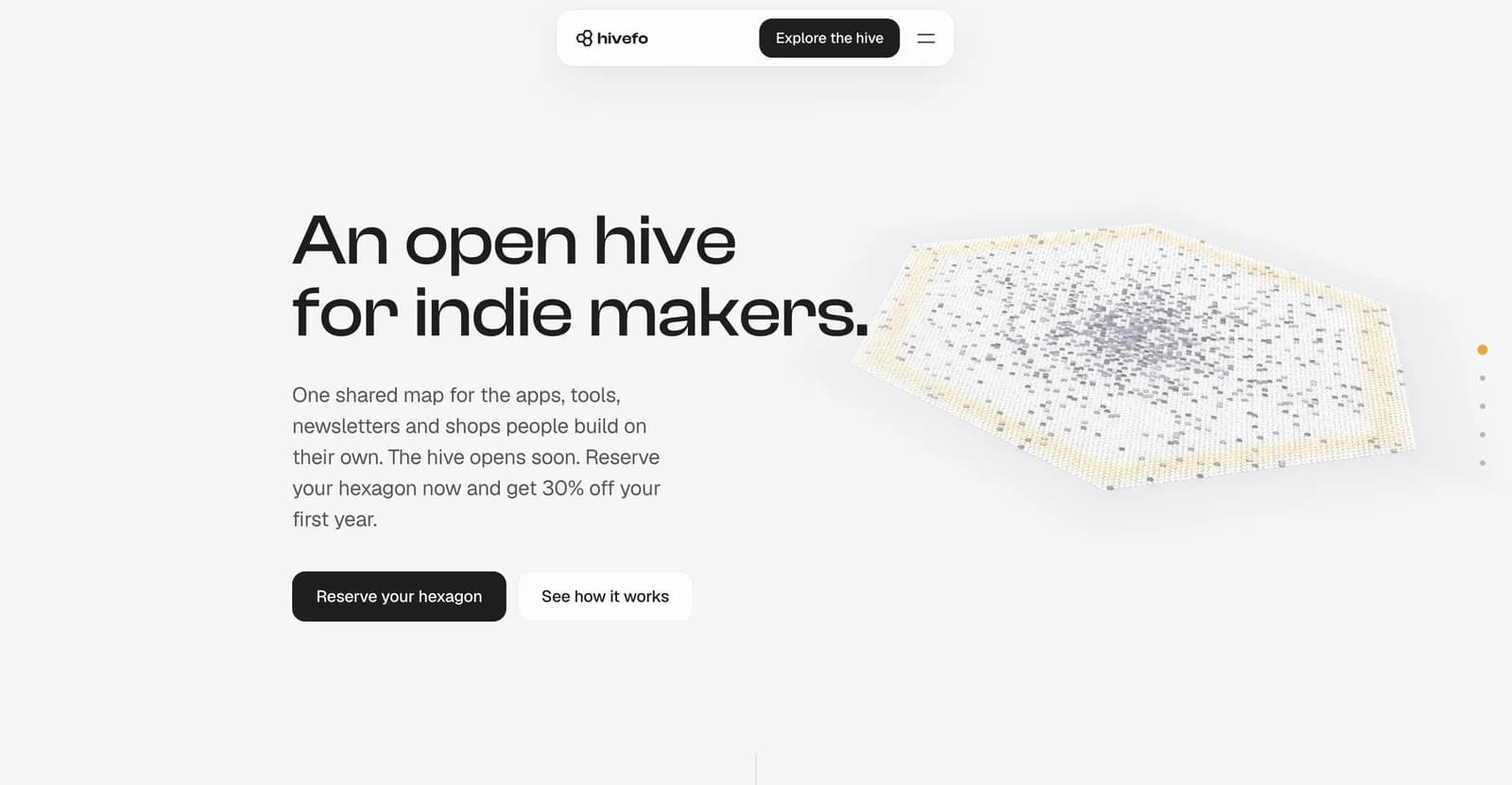 HivefoReservations openA shared map of hexagons for independent projects
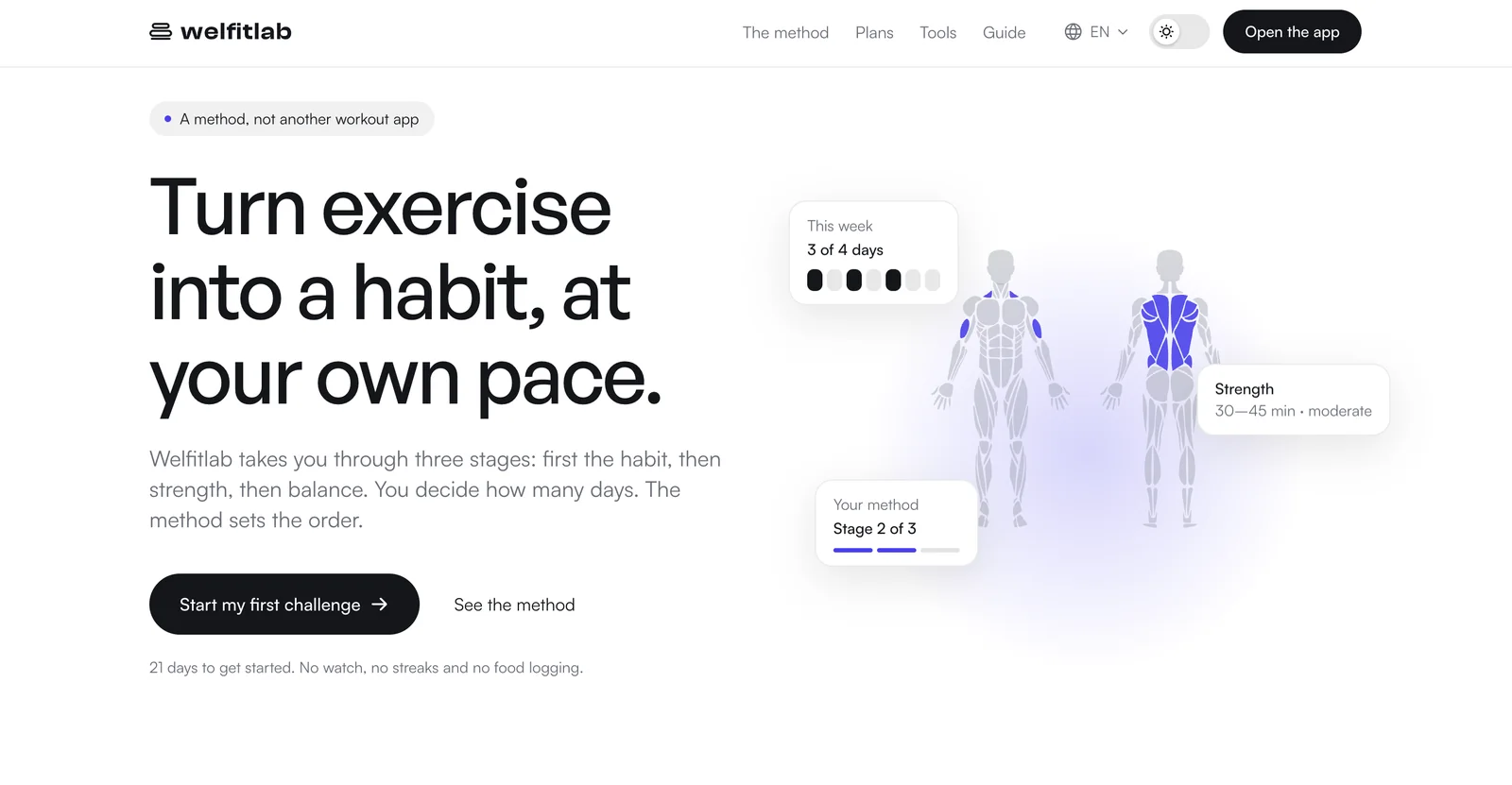 WelfitlabLiveA three-stage method to make exercise stick
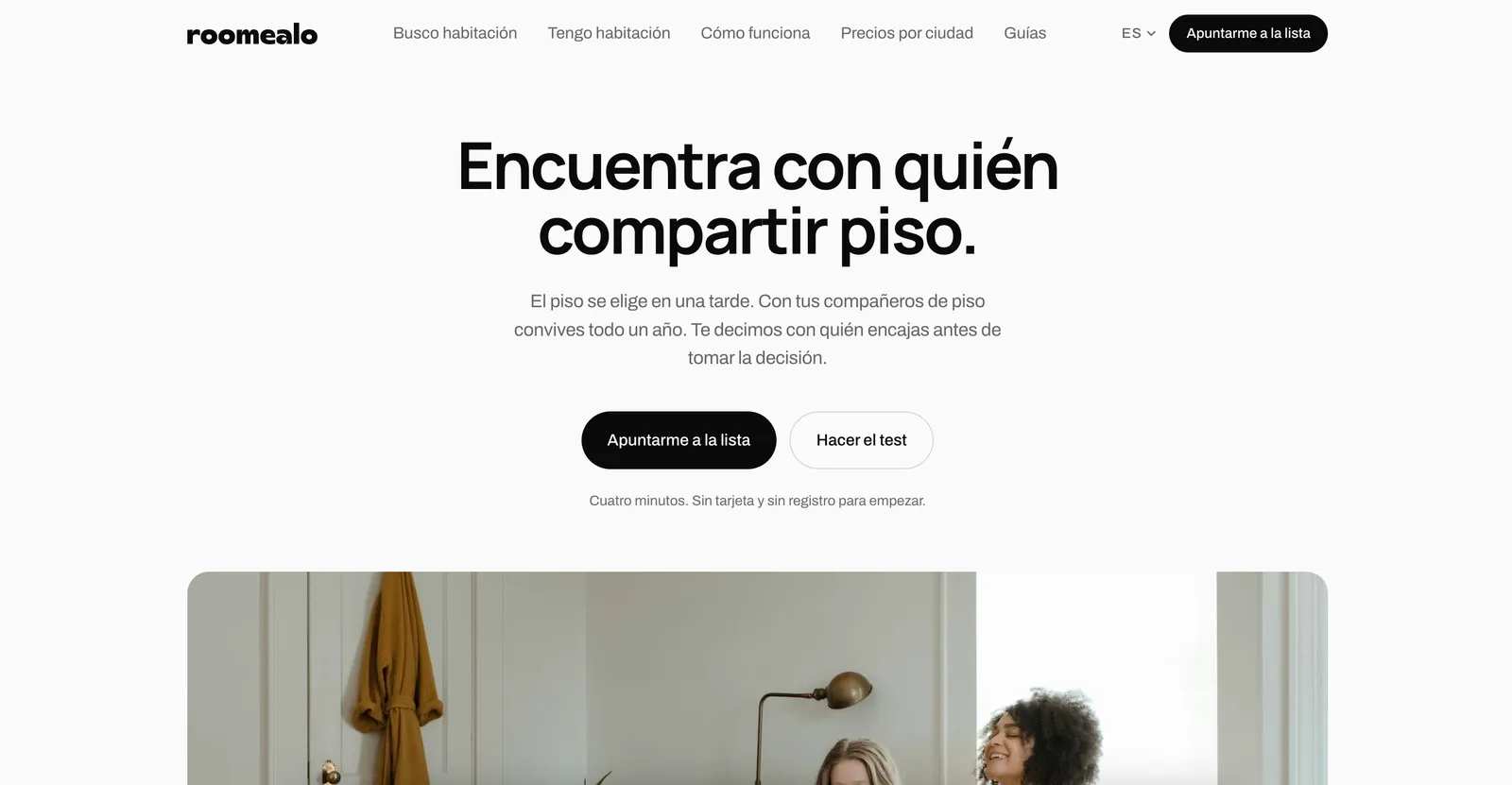 RoomealoWaitlistFlatmates matched by how you live, not by price
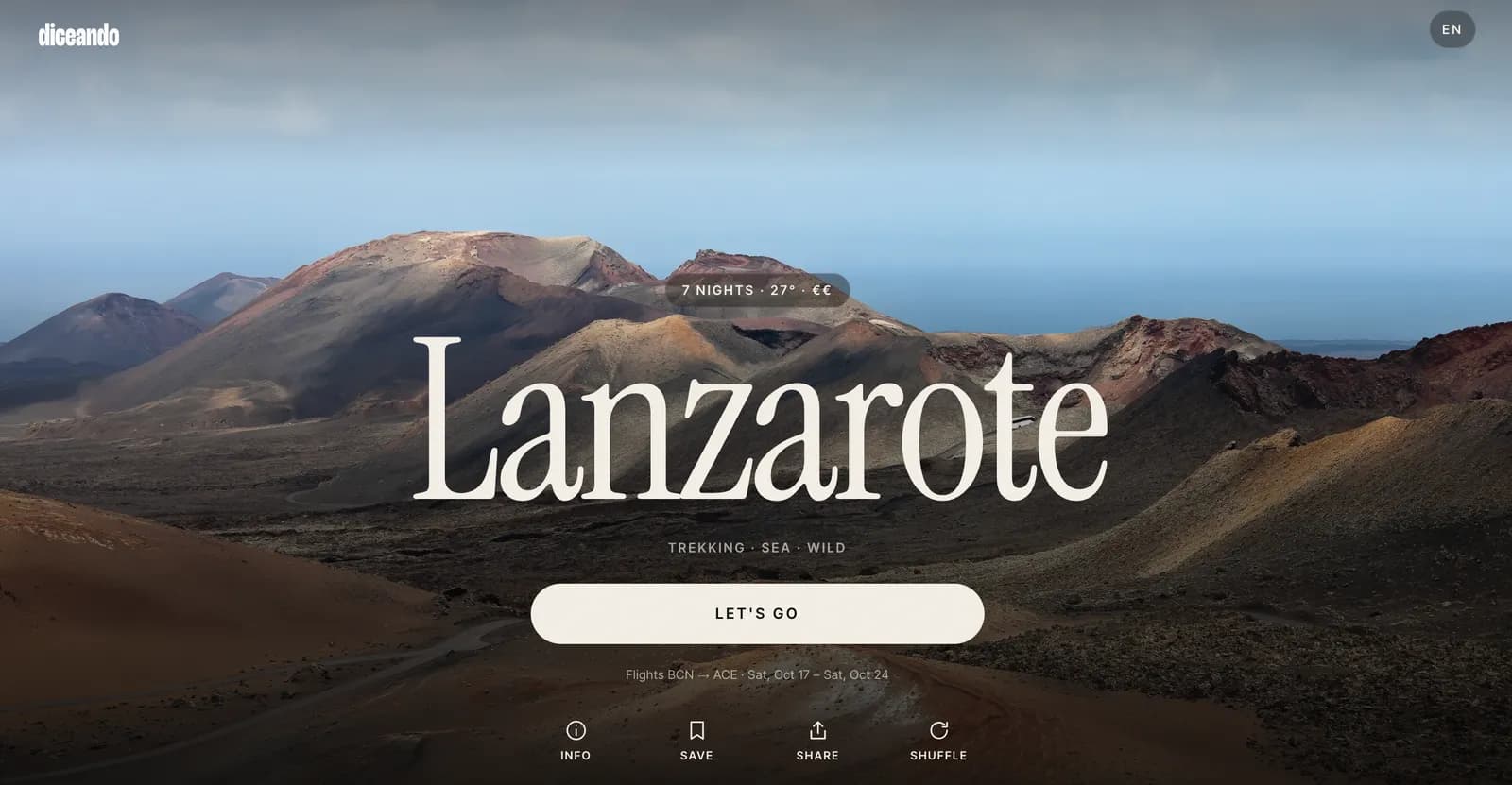 DiceandoLiveA few questions, and it picks where you travel
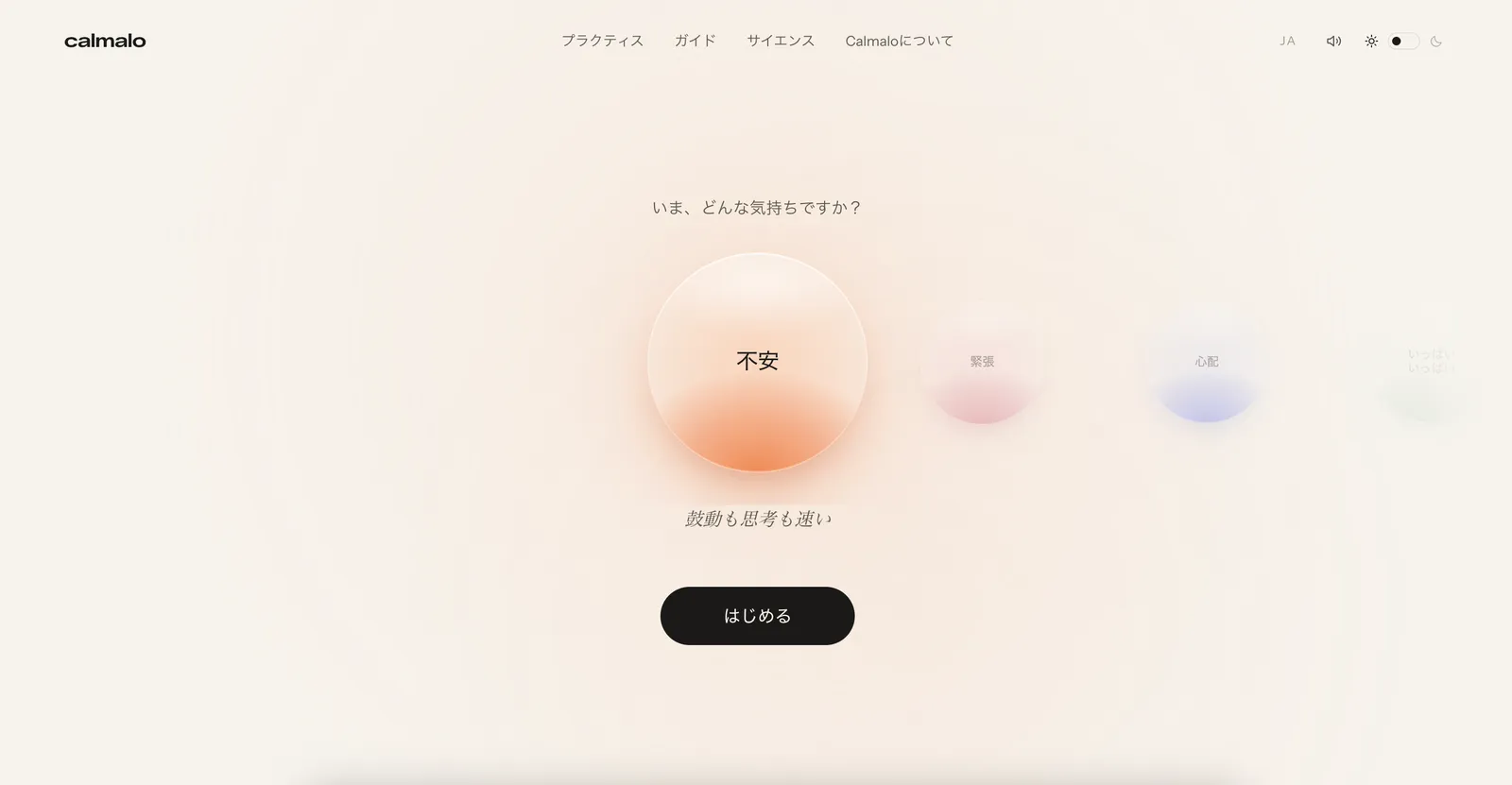 CalmaloLiveFive minutes of guided breathing when anxiety arrives